God of the PossiblePete Greig - 11 Oct 2010
I recently heard a preacher say this: ‘If it’s possible, it’s not God’. He was talking about miracles and we all like miracles. It was a great sound bite too, and we all like sound-bites. Hey, we’re the sound-bite generation - we’ll believe anything that can be said in less than 140 characters. I mean if Mein Kampf was reissued in 140 characters, the Neo-Nazis could probably re-launch the Hitler Youth Movement by the middle of next week. (I’m not advocating this, just saying it, OK?)
So this well-meaning, gifted, likeable preacher said the thing about impossibility and we all grinned and nodded and muttered our hallelujahs and arty folk made notes in their Moleskine journals, while connected people with iPhones immediately tweeted his words out to half the world, who then no doubt happily nodded and muttered their hallelujahs and re-tweeted the slogan to the other half of the world: ‘If it’s possible,’ we all concurred, ‘it’s not God’. 32 characters. Couldn’t be better. Must be true.
But of course it isn’t true at all. In just 32 characters that preacher had effectively eliminated God from everything possible; everything explicable. I’m sure that wasn’t his heart or intent – he just wanted us to have faith for more miracles. But if we start believing slogans like this we will be left with a peripheral, shrink-wrapped deity, steadily retreating with every new scientific discovery.
Just this week clever scientists at the University of Arizona have worked out how to make malaria-proof mosquitoes. If these parasite-free pests can now be introduced into the wild, this discovery will save thousands of lives every year. When lives get saved like that, I see God at work. Also this week, ingenuous bionic legs have been fitted to a crippled man in New Zealand. When the lame walk, I see God at work. When a man (who may not even be a believer in God) writes a book that helps parents raise their kids better, I see a man doing God’s work. My own wife would probably be dead if it wasn’t for the ministrations of an atheist, Irish brain surgeon named Liam Gray. We thanked him with all our hearts. But every day I still thank God.
My favourite writers and thinkers are those that live with wonder because they blur the lines between possible and impossible, natural and supernatural, science and faith, good and God. St Francis of Assisi could be deeply moved to worship by the mere sight of familiar animals. G.K Chesterton talked about ‘the ecstasy of the ordinary’. Mother Teresa saw God in the dying. 'We may ignore, but we can't evade the presence of God,' wrote C.S. Lewis. 'The world is crowded with Him. He walks everywhere incognito.' The poet R.S. Thomas described God working mysteriously through clinical hospital apparatus. Such views are rooted in a Hebrew spirituality which grounds spiritual worship in music, food, community, the spending of money, hospitality and even a delicate little medical procedure involving a flint and a foreskin. You don’t get much earthier than that. Our faith is materialistic – to do with matter; to do with stuff you can touch and taste, things you can slap on a plate or on a microscope slide.
Before he started doing miracles Jesus learned and practiced a trade when he really should (according to some mindsets) have been out and about saving the world. Presumably, when he did eventually kick in with the miracle-working business he didn’t suddenly start being God at that point. And what about his first actual, bona fide, recorded miracle? Well, it involved turning something utterly ordinary into something else utterly ordinary. The process may have been scientifically inexplicable but the end-product was nothing more unusual than rather a large amount of decent wine at a party soon imbibed and processed by various livers. Initially everyone was impressed by the miracle itself. But ultimately they saw the deeper wonder – that he himself was ‘in’ the wine as well as the miracle. Three years later Jesus threw a feast and used the bread and the wine on the table to do something remarkable. To this day we believe that Christ imparted the energy of his supernatural presence into the sharing of these elements (some would say into the elements themselves), even though they scientifically-speaking remain bread and wine. On Good Friday the world was changed by the ultimate non-miracle: death on a cross. It turned out to be possible (and this is WEIRD) to nail the hands and feet of God to a plank. For created beings to kill their own Life-giver. This grim fact led some people to conclude that Jesus wasn’t God after all. He hadn’t overthrown the Romans. He hadn’t even healed himself. He hadn’t done the impossible, so he couldn’t possibly be God.
Einstein said that you can either live as if nothing in life is a miracle or as if everything is a miracle. When we become Christians and enter into the Jewish tradition of thought, something wonderful happens: our eyes are opened to see the whole of life as a wonderful impossibility. Not just some things. Everything. Life itself is the greatest miracle of all. Cynics may require signs from the heavens, but believers see them everywhere on earth too, and not just in those answered prayers which defy rational explanation. In fact, like a science-fiction fantasist suddenly swapping his paperbacks for a real, live girlfriend, we conclude that there is something on earth even greater than impossibility.
I’m told that the chances of the big bang creating the perfect conditions for the evolution of life by fluke are about 1 in 1 x 10 to the power of 40,000. That’s a lot of zeros. The whole of life turns out to be an impossibility, a miracle to which we have become accustomed. But when we remember the wonder of it all, something wonderful happens to the way we pray:
- Firstly, we pray with greater gratitude – thanking God not just for occasional miracles but also for our daily bread
- Secondly, we pray for miracles with greater faith. It’s a lot easier to ask God to renew a dying organ when you remember that he made the first one. You pray for a non-Christian relative with greater expectancy when you remember that God is already quietly caught up in their day. And your job can become a vocation if you believe that God cares deeply about what you do (however boring and unspiritual it may seem).
Of course God does miracles. We see them regularly when we pray. But he’s also intricately involved in the un-miracles of ordinary life too. It’s great news that He is God of the impossible, but he’s God of the possible too. This being so we would do well to participate in every aspect of life – not just the miracle-moments - humbly, reverently, inquisitively, prayerfully and with unquenchable gratitude.
Way more than 140 characters, I’m afraid.
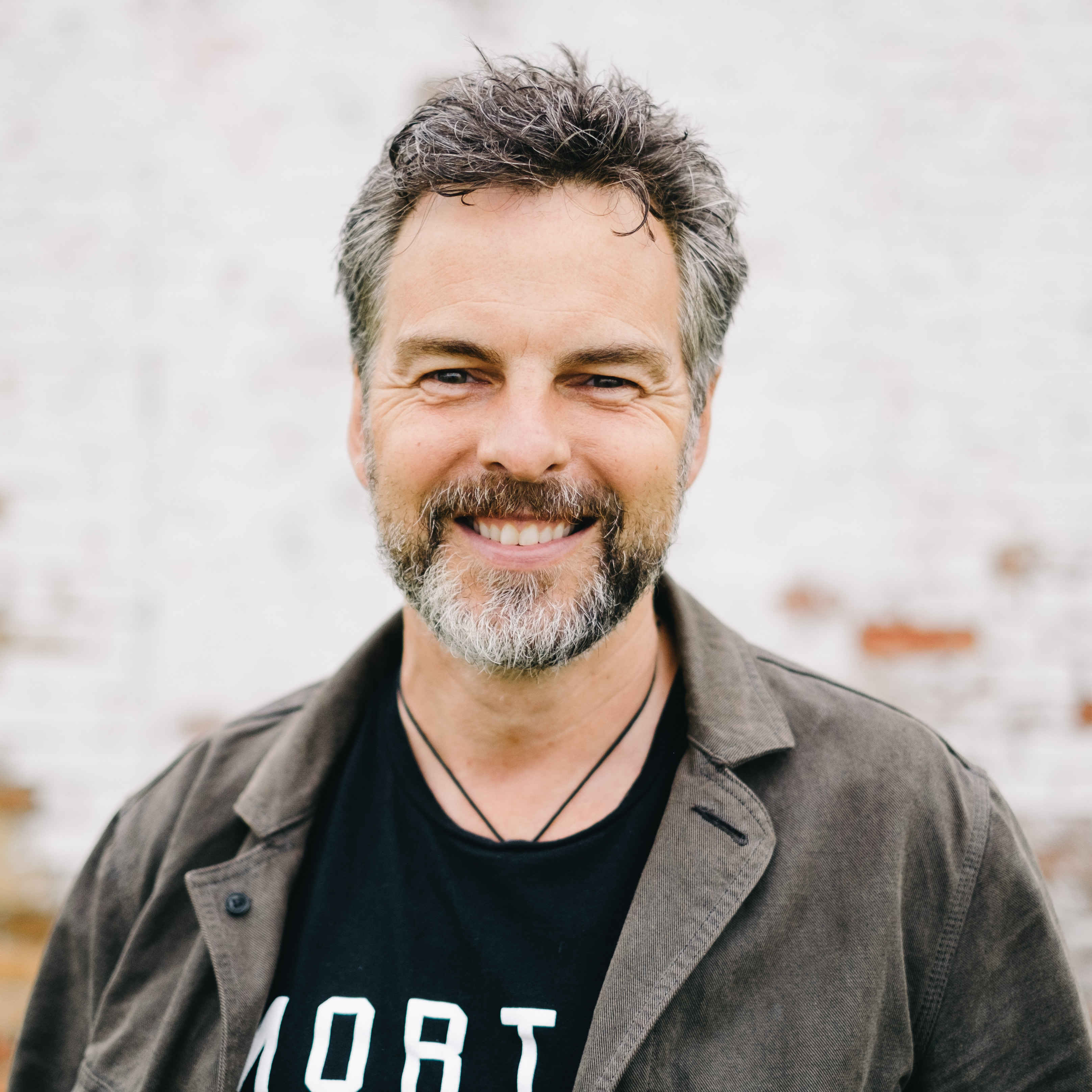
Pete is a best-selling author, pastor and bewildered instigator of the 24-7 Prayer movement which has reached more than half the nations on earth. He is also the Senior Pastor of Emmaus Rd, Guildford, England, an Ambassador for the NGO Tearfund, and teaches at St Mellitus Theological College in London. For 7 years Pete served with the senior leadership team at HTB and Alpha International. Pete's publications include 'Red Moon Rising', 'God on Mute', ‘The Prayer Course’, and 'Dirty Glory'. He loves art galleries, live music and knocking down walls.
Pete tweets regularly @petegreig
Meet Pete