Social Media and the Approval Addiction - 6 Feb 2014

We lived on farms, then we lived in cities, and now we're going to live on the Internet
- The Social Network, 2010
This week saw the 10th anniversary of Facebook and the revelation that the social media platform, launched from a university dorm room just a decade ago, is now used by 1/6 of the world’s population.
Social media isn’t just a reality of the 21st century; it’s shaping peoples realities in the 21st century.
At the beginning of 2013, when the population of the earth had surpassed 7 billion people, The Huffington Post reported that, to date, 163 billion tweets had been sent, 625,000 people were joining Google+ every day, 5 million photos were being uploaded to Instagram every 24 hours and that Facebook’s 1 billion users have listened to over 210,000 years worth of music on the site. And all that was over 12 months ago.
So The Social Network was right. Only now the tense has shifted from the future to the very present. There isn’t any ‘going to’ about it anymore; we are living our lives on the Internet.
And as it was in the farms and the cities, if we don’t understand this new way of life, we can find ourselves lost in it. And in this newly digitized generation, arguably the greatest threat to our integrity, our self-belief and our faith, is ourselves.
.jpg)
In John Ortberg’s The Life You’ve Always Wanted, he speaks of peoples “bondage to what others think of them”. This ‘Approval Addiction’ manifests itself in people’s desire to actively gain approval from others, regarding their appearance, their opinions and their personality. It drives them to compare themselves to others and mark their own successes according to the successes of those around them.
Now, over a decade since John Ortberg wrote those words, we find ourselves in a society where we, as addicts, can find a constant fix. We aren’t restricted to working hours to compare ourselves to our peers; we have the ability to trace, study and ‘Facebook stalk’ every hour of the day. We can read the thoughts and conversations of those we only know from a distance and have the same done to us, as we each become celebrities of our own walls and newsfeeds.
Yet, it’s within this place of near limitless potential for self-esteem crushing, that we so often try to find vindication.
How many times have we ranked the worth of things we’ve said and done according to ‘likes’ and ‘Retweets’? And how often have we judged the worth of others in the same way?
We need to remember how it tends to work online.
We rarely present the lives we really live; we present streamlined versions of ourselves, concentrated down to the good stuff. We only post photos where we look good, we only tag ourselves in places it looks like we’d be having fun and we have an inordinate amount of time to craft clever witticisms and articulate them as if they’ve rolled off the tongue.
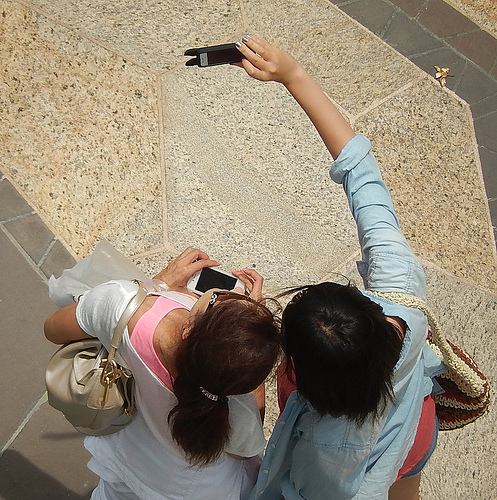
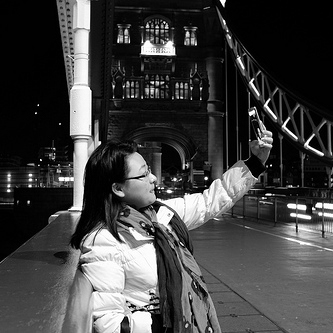
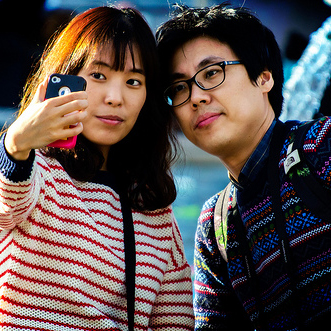
This is how it is for almost all of us. But what we forget what that actually means.
If our own ‘presented lives’ aren’t true to ourselves , they have no power to alter our own self-perception. However, when others do the same; that snap shot of their life is all we get. We have no reason to doubt that they’re not extremely fun and attractive people because we have no evidence tweeted to the contrary.
And our false perception of others impacts the perceptions we have of ourselves.
Comparing our own reality with someone else’s imagined reality is an entirely natural but entirely unhelpful thing to do. If the source of our vindication is unstable, so is the vindication, and we can’t rely on the unreliable.
“But with me it is a very small thing that I should be judged by you or by any human court. I do not even judge myself… It is the Lord who judges me.”
1 Corinthians 4 v 3-4
Social media is a wonderful thing. We’ve found a way to connect with each other and with society instantaneously. Walls have been broken down and bridges have been built by social media; on an international scale. We can learn more, connect more and grow as people, every hour of the day.
But as with most wonderful things, (fast cars, Big Macs, religion), we can use them wrongly and use them for harm.
We have to approach social media as we approach all things; with a heart for God.
If social media is shaping a generation, then in order to take that generation, our generation, seriously, we have to take social media seriously. And this involves active participation.
For many of us, learning how to function properly online is an important part of our Christian lives. As a church and as individuals it’s crucial to engage with the digital side of life.
It is a powerful, authentic tool for the mission of the church. And that means it’s our responsibility to understand this new language, with all its customs and etiquettes.
That is how we integrate ourselves into a generation, and help to lead a generation.
We just need to make sure we’re using it right.
All images are used by permission in accordance with commons copyright license terms:
Feature image is a derivative of the image 'Intruding on a selfie' by Michael Coghlan, 'Selfie' by Still ePsiLoN 'Malaysia Night 2013' by Garry Knight and 'DSC_0127' by AnaManzar08