"He was a man carrying hope for his nation" - Part 2 of Mohammed's remarkable storyThe Phantom Intercessor - 29 Jan 2015
Below is part 2 of Mohammed's story. You can check out part 1 here, with part 3 following later this week
In the summer that followed, Mohammed saw his greatest breakthrough...
He was in Syria visiting family. For three straight nights he dreamt of a voice telling him, “You are not alone here. I will not leave you alone.” After the third night, he was walking in a busy market area when something in a shop caught his eye. An employee was sat in front of his computer, staring intently at the screen where an image of Christ crucified was displayed.
“I am the way, the truth and the life” read the image.
This was an area controlled by Islamist militias. In his whole life he had never heard anyone even mention the name of Jesus out loud in town, let alone sit staring at pictures of him in view of the whole street. Mohammed went into the shop and discreetly began to probe. On first approach the man was nervous and defensive, but soon began to trust him. “To be honest" he admitted, "I am interested in the Messiah. But I don’t know much about him.”
Mohammed smiled. “I’m interested in him as well. I can help you.”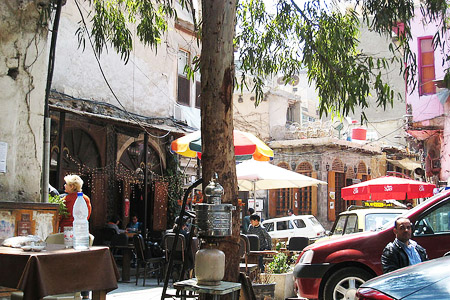
After a time of meeting together, the young man later confessed to Mohammed that he was not alone in his search. “I have five close friends who also are interested in Jesus. One of them has a Bible. We have tried to figure out who the Messiah is, but the book is long and we don’t know where to start. Would you help us?”
So Mohammed began to study with them and the young men quickly grew in their knowledge of God. But Mohammed had a condition: “If I am going to do this with you” he told them, “you need to be doing it with others.”
The men agreed, and true to their word, returned to their next meeting with tales that each had started his own group of six. “It was like a dream,” Mohammed later told me. "I couldn’t believe I was hearing my people discussing the Bible. This was not the Syria I grew up in.”
With only one Bible between them, the six copied the passages out with pen and paper, taking their sheets to their new groups, where they, in turn, copied out the story for themselves.
We were ecstatic when Mohammed returned; we, along with generations of men and women before us, had been praying for this breakthrough. So we began equipping Mohammed with the skills he needed to shepherd these kinds of indigenous movements – including giving him a set of small memory cards loaded with teaching that could be snuck through Syria’s military check points.
Mohammed continued his work and groups in the area continued to 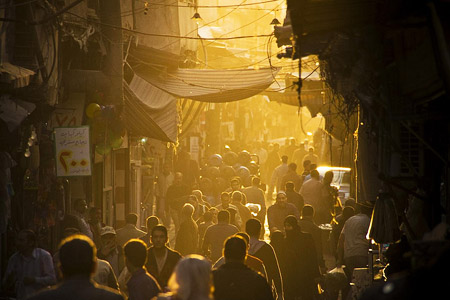 multiply. “They keep reading because of the positive changes they experience in their lives from this message” he told us.
One morning later that year Mohammed had a young woman, dressed in conservative Islamic dress and the banner of a rebel tied around her forehead, arrive at his door. “I give my body to jihadist men," she told him, "to receive the jihadist’s reward.”
Though neither Mohammed nor I had ever heard anything like this before, a report was later released describing a jihadist sex trade that had emerged in Syria in which Muslim woman were given to jihadists under the pretence that God would give such women a martyr’s reward for their service .
“Who told you this?” Mohammed demanded. “They are lying to you. God did not create you for this.” He gave her one of the memory cards and told her she knew where to find him if she wanted to know more.
The woman left and began to study the teaching. She soon became a follower of Christ and began teaching a new group; some young women she had invited with her on the journey.
But despite the miraculous ways Christ was touching the lives of Syrians, Mohammed felt increasing stress as a result of the growth of his networks...
Mohammed's story will continue tomorrow...
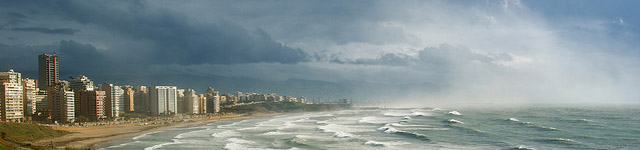
All images are used by permission in accordance with commons copyright license terms: Feature image is a derivative of the images 'Syria Grunge Flag' by Nicolas Raymond, 'Storm...' by Julia, 'Syria' by Marc Veraart and 'Street scene in Souq Saroujah, Damascus' by Oliver Laumann