'I lived the MTV generation's dream - now I'm a Mercy Ship missionary' - 4 May 2005
|
If you happened to be in New York City late June last year, responsibly on your way to work in the morning, you might have passed me on Houston Street. I'd probably have been disheveled: stumbling and slurring my way home after a night of drugs and debauchery in a trendy SoHo hotel after another gala film premiere. |
 |
I was running an event company that produced events and threw some of the biggest parties in the city. I worked with everybody: MTV, VH1, ABC, Cosmo, Elle, Stuff. All the big record labels.
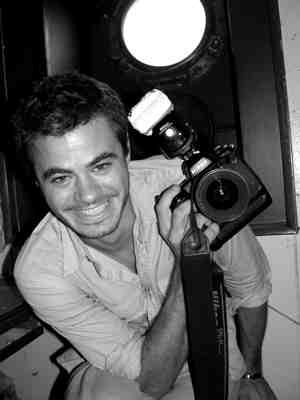 Big windows and skylights traded for portholes and wooden decks with large views of never-ending horizon. The exact circumstances that led to this radical change of events in my life are convoluted and perhaps too lurid for this space, but I assure you they were as remarkable as Lot's exit from Sodom.
A month of soul-searching followed a dramatic exit from New York. A time of retrospection and prayer. A time to look back on a decade of selfishness that surprisingly bred unhappiness and emptiness. A deal with God to try things out His way, and a pledge to spend a year in service to the poor as a tithe for the last 10: a penance of sorts.
Almost five months in, and it's been a wild ride. I landed what others repeatedly call the "best job on the ship." Although job may not be the appropriate term. All of us onboard Mercy Ships pay crew fees to serve. We pay for our room and board and insurance and malaria meds to keep administrative costs low. This seems crazy to some, but the rewards and the freedom are plentiful.
They came with the hope that Mercy Ships would grant them one of the coveted surgery slots. They came for a cure, and with a collective need so great, it was difficult to process and even harder to explain. Unspeakable tumors grew from faces and necks and mouths. I met 15-year-old Alfred on the other side of the lens—an encounter so horrific and indelible it sent me scurrying away with wet eyes to recompose. The two days and more than 2,000 photos put a face on that thing about our responsibility to the poor.
 The thing in Matthew 25 about feeding the hungry and the thirsty. About offering hospitality to the outcast, clothing the naked, visiting prisons, caring for and healing the sick. Do these things, and we do them to the least of His brothers. We do them for Him. He says this three different ways, and then says if we don't, then we're screwed.
As a self-centered person, this just didn't make sense to me. The plight of the world's weak and poor just "was"—their pain and suffering no more resonant or real to me than Sally Struthers' kids in Africa covered in flies. I'd hear statistics of 2.8 billion people living in poverty—on less than $2 a day. Of the world's 1.2 billion living in what is called "absolute poverty" or less than $1 a day. Of the billion who lack clean water. Of the 2.4 billion who don't have even basic sanitation like, ummm, toilets. They were just numbers to me, numbers without faces or solutions, and besides, a billion of anything was just inconceivable anyway.
 Through His redemptive grace, I've been given an opportunity to tell stories with pen and camera in a vibrant land of the less fortunate and downright destitute. Allowed to escape a life of selfishness with my health and my sanity. There's that verse in the too-little-noticed book of Joel about God restoring the years the locusts have eaten. "You shall eat in plenty and be satisfied, and praise the name of the Lord your God, who has dealt wondrously with you. And my people shall never again be put to shame" (Joel 2:26). He surely does deal wondrously.
My life was enviable from the outside. I went out with a top model. Wore a Rolex. Did TV commercials. New Year's was a three-week long beach party in Brazil and Uruguay. Most would say I was living out the MTV generation's dream.
Cut to the present, where I write this from the other side of the Atlantic, sailing in waters somewhere between Benin, West Africa, and war-shredded Monrovia, Liberia. My old ways, the city and its nightlife seem far away.
I am serving a year as the volunteer photographer onboard the hospital ship Anastasis with the global charity Mercy Ships. Mercy Ships operates a fleet of hospital ships, the "Anny" being the largest—a towering 52-year-old, 550-foot vessel carrying a standing crew of more than 350. The work done onboard and off radically transforms the lives of poor and needy Africans through free life-changing surgeries and healthcare, education and community development projects.
|
A most dramatic lifestyle change for sure—my Nokia and huge Bryant Park loft with grand piano traded for two Nikon D1Xes and cramped cabin quarters. My walk-in shower for a ship stall that saw the unforgiving slaughter of 12 cockroaches last month. |
...soul-searching followed a dramatic exit from New York. A time of retrospection and prayer. A time to look back on a decade of selfishness that surprisingly bred unhappiness and emptiness.... |
Big windows and skylights traded for portholes and wooden decks with large views of never-ending horizon. The exact circumstances that led to this radical change of events in my life are convoluted and perhaps too lurid for this space, but I assure you they were as remarkable as Lot's exit from Sodom.A month of soul-searching followed a dramatic exit from New York. A time of retrospection and prayer. A time to look back on a decade of selfishness that surprisingly bred unhappiness and emptiness. A deal with God to try things out His way, and a pledge to spend a year in service to the poor as a tithe for the last 10: a penance of sorts.
Almost five months in, and it's been a wild ride. I landed what others repeatedly call the "best job on the ship." Although job may not be the appropriate term. All of us onboard Mercy Ships pay crew fees to serve. We pay for our room and board and insurance and malaria meds to keep administrative costs low. This seems crazy to some, but the rewards and the freedom are plentiful.
A week into the gig, the ship held a patient screening. I came face to face with 5,000 sick lined up outside a Benin sports stadium to meet our doctors and surgeons.
They came with the hope that Mercy Ships would grant them one of the coveted surgery slots. They came for a cure, and with a collective need so great, it was difficult to process and even harder to explain. Unspeakable tumors grew from faces and necks and mouths. I met 15-year-old Alfred on the other side of the lens—an encounter so horrific and indelible it sent me scurrying away with wet eyes to recompose. The two days and more than 2,000 photos put a face on that thing about our responsibility to the poor.
The thing in Matthew 25 about feeding the hungry and the thirsty. About offering hospitality to the outcast, clothing the naked, visiting prisons, caring for and healing the sick. Do these things, and we do them to the least of His brothers. We do them for Him. He says this three different ways, and then says if we don't, then we're screwed.As a self-centered person, this just didn't make sense to me. The plight of the world's weak and poor just "was"—their pain and suffering no more resonant or real to me than Sally Struthers' kids in Africa covered in flies. I'd hear statistics of 2.8 billion people living in poverty—on less than $2 a day. Of the world's 1.2 billion living in what is called "absolute poverty" or less than $1 a day. Of the billion who lack clean water. Of the 2.4 billion who don't have even basic sanitation like, ummm, toilets. They were just numbers to me, numbers without faces or solutions, and besides, a billion of anything was just inconceivable anyway.
|
Yet Alfred was a face. A face on the verge of manhood, and something unexplainable was growing out of that face where his mouth should be—a cemento-ossifying fibroma or enormous benign tumor. |
How differently we might use our lives if we caught just a glimpse of the Father's heart toward His weak and suffering children. Following God has been many things so far, but certainly not dull.... |
His story proved to be like many of the cases and patients we saw. Years of heartache, a family living on about $1 a day, unfruitful visits to countless witch doctors who spread pastes and cut his face. Yet God had a plan for Alfred, and watching him heal on the ward would prove a watershed experience for me. He and I became pals, and I was fortunate to drive him home to his village after his second operation.
I recently read the biography of World Vision's founder, Bob Pierce, and was struck by his simple prayer to God. "Let the things that break Your heart, break mine." How simple, yet profound. How differently we might use our lives if we caught just a glimpse of the Father's heart toward His weak and suffering children. Following God has been many things so far, but certainly not dull. I've taken more than 40,000 photographs—observed and recorded five or six surgeries. I've driven Land Rovers thousands of miles over dusty African terrain. I've seen some of God's stranger creations—elephants, hippos and even a komodo dragon. I've covered patient screenings and treatments in remote villages only accessible by small dugout canoes.
I recently read the biography of World Vision's founder, Bob Pierce, and was struck by his simple prayer to God. "Let the things that break Your heart, break mine." How simple, yet profound. How differently we might use our lives if we caught just a glimpse of the Father's heart toward His weak and suffering children. Following God has been many things so far, but certainly not dull. I've taken more than 40,000 photographs—observed and recorded five or six surgeries. I've driven Land Rovers thousands of miles over dusty African terrain. I've seen some of God's stranger creations—elephants, hippos and even a komodo dragon. I've covered patient screenings and treatments in remote villages only accessible by small dugout canoes.
Through His redemptive grace, I've been given an opportunity to tell stories with pen and camera in a vibrant land of the less fortunate and downright destitute. Allowed to escape a life of selfishness with my health and my sanity. There's that verse in the too-little-noticed book of Joel about God restoring the years the locusts have eaten. "You shall eat in plenty and be satisfied, and praise the name of the Lord your God, who has dealt wondrously with you. And my people shall never again be put to shame" (Joel 2:26). He surely does deal wondrously.This was written by SCOTT HARRISON a photographer, who has set sail on the Anastasis, the largest hospital ship in the Mercy Ships fleet. You can email Harrison through his website, http://www.onamercyship.com/, where he posts hundreds of images and his blog. This article has been adapted from the May/June 2005 issue of RELEVANT magazine.