Learning to Breathe by Phil TogwellPhil Togwell - 15 Dec 2006
Emma and I were at a lecture on ‘cochlear implants and educating deaf children’ recently – Poppy, our eight-year-old daughter, is deaf, and she’s had one of these incredible cochlear implants since she was two (invented by an Australian Christian, incidentally – it’s an amazing story!). Although the lecturer was speaking to a hearing audience, he couldn’t help slipping into using sign-language as well. At one point, he made a joke about it and then admitted that he actually preferred signing.
“Sign language is deeper, more expressive,” he explained. “Take the word ‘know’ for instance. It can mean many things, but these many meanings are hidden in the limitations of that little word, ‘know’. In sign, however, I could say, ‘I know’.” He cupped his hand and motioned to his head. “Or, I could say, ‘I know’!” He moved his hand and cupped it towards his stomach. He smiled warmly, “I don’t think I even need to tell you what the difference is, do I?”
We know that prayer and mission belong together don’t we? But do we really know it? Is it in our guts? Have we digested it? Is it embedded deeply into the daily rhythms of our lives and lifestyle? Or is it just a head thing? Is it something that spills off our tongues with ease or sits gathering dust with our ‘vision statements’? If you or I were to sign it, where would we cup our hands and point: towards our head or towards our guts?
Prayer and mission. Pete Greig described it recently as “the art of breathing, spiritually”. We all breathe – it keeps us alive (believe it or not, you’ve been breathing the whole time you’ve been reading these few paragraphs… and it’s likely that you’ll carry on doing so until the end!). We see this rhythm clearly in the life of Jesus as reflected in the Gospels. He was fully aware of the desperate needs of those crowding around him, but Jesus often withdrew to the hills to pray. It was important for him to recharge (“those that wait on the Lord will renew their strength”), to still his soul before the Father (“we set our hearts at rest in his presence”) and to ask and listen. Have a skim through Luke’s gospel – you’ll find loads of examples.
I’ve been reflecting a lot on Matthew chapter 9 recently. The whole chapter is fantastic. Confrontations with angry, arrogant religious leaders. Stories of amazing miracles. And then there’s Jesus and his disciples visiting all the towns and villages, telling people about the Kingdom of God, and healing every kind of illness. Incredible stuff. Now take a breath for a moment as I read those final verses...
I imagine Jesus and his disciples sitting on a dry, dusty hillside overlooking a few of the villages. It’s been a long, tiring, and emotional day. The disciples are tired and a little bit shell-shocked. They're still trying to digest all that they’ve experienced, but they are full-of-faith as well. They find themselves thinking, "Is there nothing that this guy can’t do?" The sun has set and the air is cool and still as Jesus looks out across the valley. He sees the people still crowding the dusty village paths. It is likely that he ‘sees’ beyond the surface, to a whole wide world of similar, helpless, God-loved people. “Look at them,” he whispers, aching with compassion. The disciples cease their own recollections of the day’s experiences and listen closely. “Like sheep without a shepherd… lost, confused… so harassed and helpless.” Jesus pauses and turns towards his disciples, his friends. His eyes are wet and alive. “My friends, these fields are ripe for harvest. Ask the Lord of the Harvest to send workers into these fields.”
So they do. And so the Lord of the Harvest does. He sends them. I love the way ‘The Message’ describes it (have a look, Matthew chapter 10v1). This is often the way of things, isn’t it? As we pray, the Lord of the Harvest sends us. You and me. We become part of the answer to our own prayers.
I’m convinced that part of the reason that we feel so impotent and powerless in mission - in our attempts at ‘going into all the world and make disciples’ - is that we ignore the pattern that Jesus lays out. The one that he demonstrates through his own life. Instead of ‘asking the Lord of the Harvest’, instead of ducking into prayer first, we just go. We see the needs and we attempt to meet them. We’re like disciples who hear Jesus lamenting, “they’re like sheep without a shepherd… lost, confused… so harassed and helpless,” but we leap to our feet and immediately run back down the hillside into the crowds. (Or maybe we’re like disciples who pull up a few chairs and have a committee/team meeting to figure out what we can do?) We set up projects. We organise programmes. We run events and ever-cooler services. All of these things are ok, by the way. We put all of our experience (remember, the disciples had only just experienced Jesus at work – they knew what to do, surely?) into action. But we rarely pray first. We rarely ask God, “send workers Father. Send us. And show us how to go.”
Breathe in. Breathe out. In. Out. In. Out. We must learn to breathe.
And this isn’t an isolated example. Having been resurrected, Jesus spends 40 days eating and drinking and talking with his friends before being taken up into Heaven (does anyone else read that and wonder just how bizarre/awesome that moment must have been?!). It must have been very tempting for the disciples to want to go ‘tell the world’ immediately, but Jesus tells them not to. “Wait,” he insists. “Wait and pray. Wait together. Wait for Holy Spirit to come.” And, like Ezekiel’s re-animated corpses, when Holy Spirit comes on the gathered disciples – when ‘the breath’ from the four winds comes - they become an on-fire army. And they infect everyone they come close to. This is what 24-7prayer exists for.
~~~
24-7prayer have partnered with the Stop The Traffik campaign because we feel Jesus has turned and spoken to us, as a movement, as a community and as a family. “Look at them… lost, confused, enslaved… so harassed and helpless!” The hundreds of thousands of human beings who are trafficked into slave-labour or the sex-trade every year are far more than harassed and helpless. They’re beaten and abused, treated as less-than human. And God sees every one of them. (Check the Stop The Traffik website for up-to-date stats and stories.)
We believe that Jesus has spoken to us, “my friends, these fields are ripe for harvest. Ask the Lord of the Harvest to send workers.” And this is why we need to pray. All of us. We’re calling on groups and churches all across the UK, and across the world, to (at the very least) pray through-the-night on 24th March 2007 – to form a prayer-vigil and to pray for a change in our world, for human-trafficking to end. (We’ve set up a new 24-7/Stop The Traffik website, which will list every prayer vigil location, as well as carrying resources and latest updates on the campaign.)
That’s the breathing-in. We’ll also need to breathe-out. We have to spill out of prayer vigils and ‘upper rooms’ as we are sent by the Lord of the Harvest into ripe fields.
The day after these prayer vigils, Sunday 25th March 2007, is the 200th anniversary of the abolition of the trans-Atlantic slave-trade, and has been labelled ‘freedom day’. It was the Christian MP, William Wilberforce, who wrestled this abolition law through Parliament, finally seeing it passed in the final week of his life. He presented an anti-slavery motion in Parliament, against strong opposition and vested interests, every year for over eighteen years, having committed himself to “use his position for God”. (It was John Newton, the writer of the hymn, ‘Amazing Grace’, who urged him to remain in politics and not to join the clergy. I still find it amazing how many young people seem to only aspire to be great preachers or worship leaders or church-leaders. Where are those aspiring to be great teachers and professors, politicians, artists and musicians, doctors, academics, architects and social workers – those who will “use their positions for God”?)
The call of Jesus is to pray as if it all depends on God, and live as if it all depends on us. Breathe deeply…”
Photo for title image and article thumbnail taken by Parc Cruz.

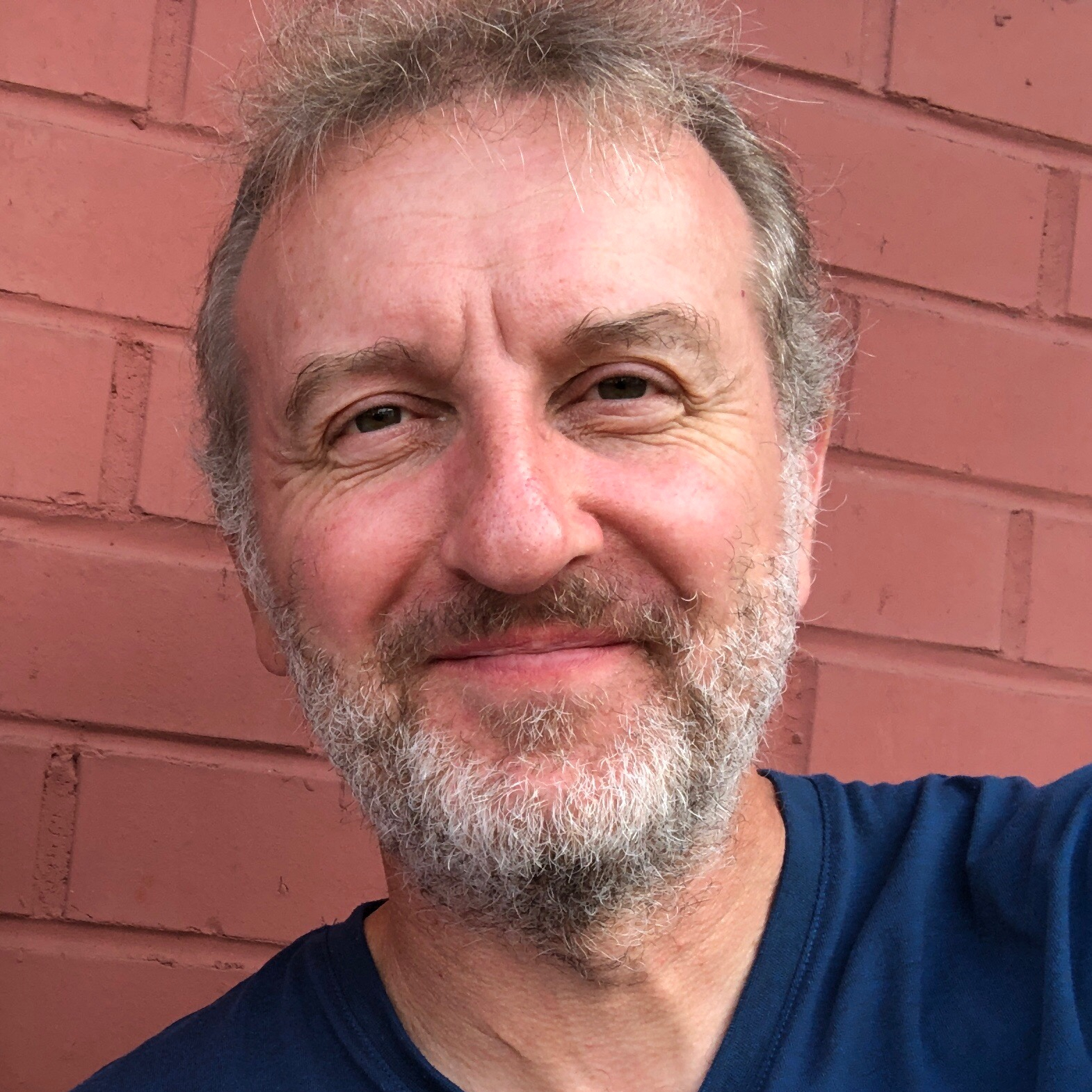
Phil leads the Prayer Spaces in Schools teams, as well as the Anglican Diocese of Durham’sPrayer Project. He’s worked in a wide range of Youth and Community settings and also served at 24-7’s UK Director for 7 years. Phil lives by the North Coast of England with his wife, daughters and dogs.
Meet Phil